How to Find and Secure the Best Vending Machine Locations
Finding the best vending locations comes down to four simple factors that you can use to identify, review, and secure a profitable spot for your machine.
Everyone tells you to chase “high traffic.” So you picture a busy lobby, sign the deal, and watch the machine barely clear a few hundred dollars a month. Traffic alone was never the point.
After placing machines in more than 100 locations, the pattern that actually predicts a winner comes down to four traits and a short list of location types that hit all four almost every time.
Vending is a real market — the U.S. retail vending machine industry was worth roughly $15 billion in 2024, and the operators who capture their share are the ones who pick the right spots. Get this right, and a single spot can run in the low thousands per month while you keep your day job.
Get it wrong, and you’ll spend months restocking a machine that never should have been placed. One operator we work with went from a single struggling machine to a route covering 40 locations, earning more than $80,000 per month in total.
What changed was how he learned to read locations. And now I’ll teach you the same approach.
NEW TO THIS? Grab the free 90-Day Vending Business Blueprint— it walks through the first placement start to finish.
What actually makes a vending location profitable
Foot traffic matters, but only the kind that pauses. A hundred people rushing past to a meeting won’t buy. A dozen people waiting with nothing to do will. The best vending machine locations share four traits, and the more of them a spot has, the more predictable your revenue.
High foot traffic that slows down
You want people who linger: waiting rooms, break rooms, elevator banks, and mailrooms. Movement plus a pause is what turns a passerby into a sale.
A captive audience with no easy alternative
The magic happens when someone wants a snack or a drink and the nearest store is blocks away or closed. If there’s a 24/7 convenience store around the corner, your machine competes with it. If there isn’t, you’re the only option.
Long or around-the-clock hours
A location that’s open nights and weekends keeps selling while you sleep. Round-the-clock buildings also dodge the seasonal dips that hit places tied to a single schedule.
A manager who wants it there
When the property manager or facilities lead treats the machine as a perk for their people, they promote it and keep it welcome. When they don’t, even a good spot underperforms.
TIP Score a prospect against all four traits before you fall in love with it. Three out of four is a strong location. One out of four is the machine that sits five minutes from your house and does $700 a month.
The best vending machine location types
Three categories check the most boxes for new operators. Each earns differently, so the numbers below are per machine unless noted and are drawn from real operator routes. Treat them as ranges, not promises. Your results depend on the specific site, the products, and how well you place the machine.
1. Medical outpatient facilities
Urgent care, outpatient clinics, and even pet hospitals are quietly some of the best spots going. People arrive stressed; they wait, and they rarely have food nearby. Staff work long shifts and grab drinks and snacks between patients. The buildings run seven days a week, so there’s little seasonality.
A single combo machine in this setting typically costs $1,200 to $1,800 per month. One operator’s urgent care machine holds steady near $1,500 a month, selling a mix of over-the-counter basics like pain relievers, conventional snacks, and energy drinks for the staff.
2. Residential properties
Class A apartment buildings and senior living communities give you customers who live on-site, which means sales at 11 p.m. and on weekends when other locations go quiet.
Residents pay a premium to avoid getting in the car late at night, and drinks and frozen items carry the best margins. That willingness to pay is real: the NMHC’s 2024 renter preferences survey found renters will pay $55 to $59 a month more for amenities they consider essential.
A single machine in a strong apartment building often averages more than $2,500 a month. Scale changes the picture fast: one operator running four apartment complexes near a college campus averages more than $5,000 per machine across them.
At the top end, a full micro market — an unattended, open-shelf store rather than a single machine — inside a high-volume building can clear around $20,000 a month, roughly $600 a day. Keep that distinction clear: the $20,000 figure is a micro market, not a single machine.
NOTE A micro market is a self-checkout setup with open shelving, coolers, and a kiosk. It holds far more inventory than a single machine, so its revenue isn’t comparable to a single-machine figure.
3. Multi-shift warehouses and manufacturing
Facilities with overlapping shifts create demand around the clock. The 7 a.m. crew buys breakfast while the night shift clocks out and buys dinner, and everyone wants an energy drink to get through the hours. Physical work drives steady, high-volume buying.
A single machine at a busy plant can reach roughly $5,000 a month. The largest sites, running micro markets across 16 or more break rooms, have been reported to earn nearly $75,000 a month. Again, that’s a full micro-market operation across a giant facility, not a single machine.
Beyond these three, offices, gyms, schools, and hotels can all work when they hit the four traits. They’re solid rather than standout, and they’re a fine place to start while you chase the higher-earning categories.
How to qualify a location before you commit
Treat every prospect like you’re buying a small rental property, because a bad placement costs you months. Before you sign anything, confirm the location clears real thresholds and ask the questions that reveal whether the foot traffic is actually there.
Rough minimums worth holding to:
- Residential: around 200 units in a single building, not a spread of garden apartments
- Manufacturing: at least 150 employees, and confirm the headcount on every shift
- Medical outpatient: roughly 150 staff plus 100 patients a day, so about 250 people moving through daily
Those shift numbers matter more than they seem. One operator assumed a second shift matched the first at about 75 people and placed based on that. The second shift turned out to be three people. Ask for exact headcounts per shift, not a total.
A few questions to ask the manager on your walkthrough:
- Where does the most foot traffic actually flow — the package room, the lounge, or the lobby?
- Is the company growing or hiring soon? More people means more sales over time.
- Do you provide free snacks or drinks anywhere that would compete with the machine?
TIP Walk the building at the time of day when it’s busiest. A lobby that’s dead at 10 a.m. might be packed at shift change, and you can only tell by standing in it.
Where to place the machine inside the building
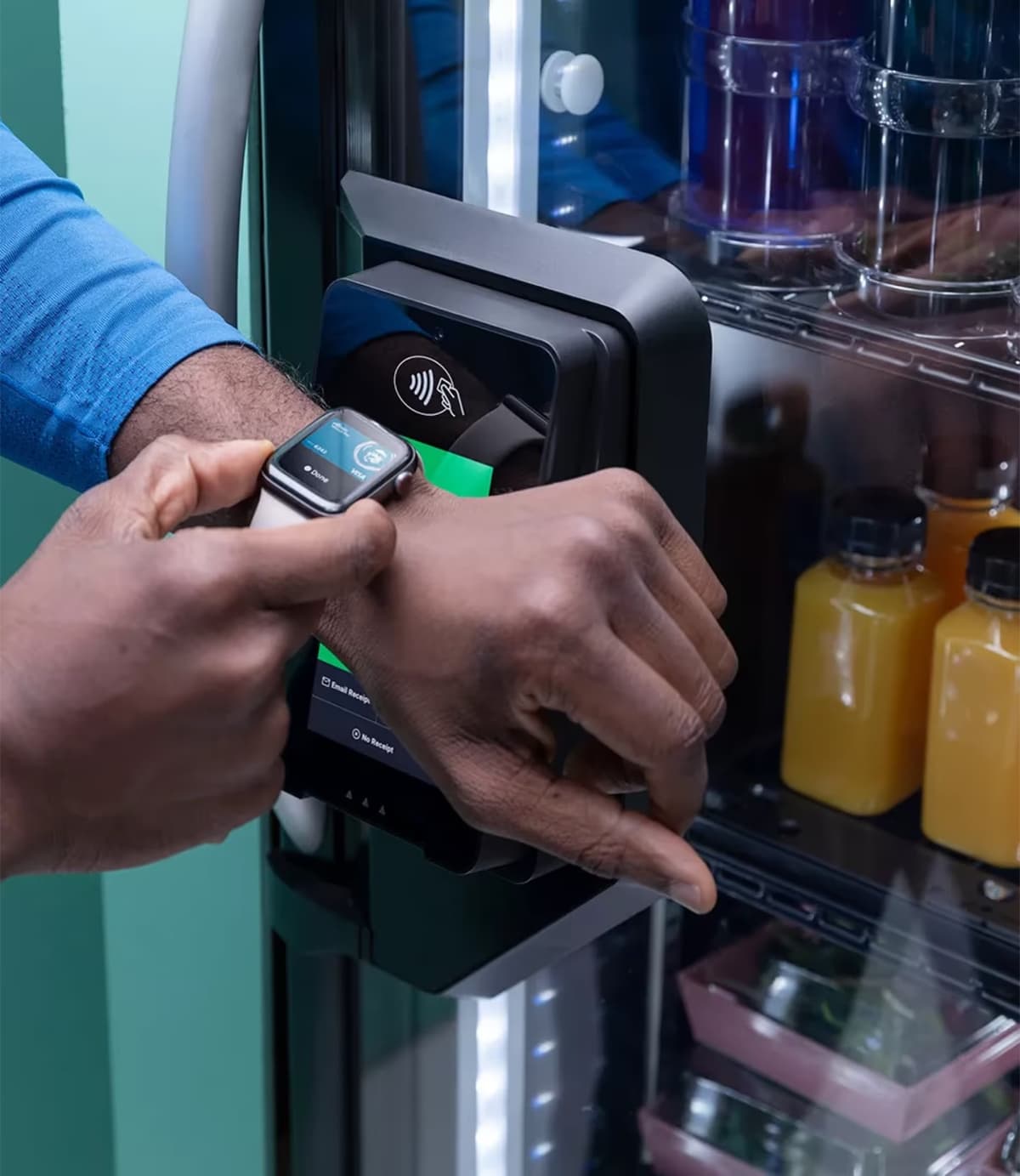
Getting into the building is half the job. Where you put the machine inside can double your revenue or cut it in half. People buy in specific mental states and specific spots.
Research on impulse buying shows that the point-of-sale environment and visual cues drive unplanned purchases, so put the machine where people naturally pause with nothing else to do.
Not sure where that spot is? Here are three factors that drive impulse purchases:
Catch people between activities
Someone leaving a meeting or heading to the restroom is more open to a purchase than someone rushing in late. Position near those natural pause points.
Follow the path of least resistance
People take the shortest route and won’t detour even 10 feet for a machine. Put it on the way, near the elevator rather than the stairs.
Make it visible before it’s reachable
A machine seen from across a room outsells one tucked in a corner. Bright, glass-fronted machines win because people decide to buy before they arrive.
Keep in mind, this psychology plays out differently depending on the building:
- Offices: the elevator lobby beats the break room. People bring lunch to break rooms and have already decided what they’re eating, while elevator waits are dead time that invites an impulse buy. Moving one machine to an elevator lobby doubled the operator's revenue.
- Apartments: the mailbox area is prime, since residents check mail daily and pause to do it. Gyms and pools work too — a fitness-center machine can do around 3x a laundry-room machine, and a non-seasonal pool machine one and a half to two times.
- Warehouses: near restrooms and the loading dock. Everyone uses the restroom on every shift, and delivery drivers waiting at the dock will pay for the convenience they can’t get otherwise.
- Medical settings and hospitals: waiting rooms and overnight access points do best. Skip spots right next to a cafeteria, where you’d lose to cheaper food.
How to find and pitch these locations
You can build a prospect list from your laptop in a single afternoon, which matters when your building time is a few hours on the weekend.
Open Google Maps and search for two kinds of targets in your area: high-traffic places where people gather and high-employee places like manufacturing plants. Both should surface companies with phone numbers and websites attached.
Run a search for manufacturing plants in a mid-sized city, and you’ll turn up a couple dozen leads. Add medical offices, apartment complexes, and sports complexes and the list grows fast.
Each listing provides a phone number and usually a contact email, which is all you need to reach out.
When you make contact, lead with the amenity, not the money. Framed right, vending reads as a modern building amenity: a convenient perk for their residents, patients, or staff at no cost and no equipment expense to them. Keep the first message short, since the goal is a quick face-to-face rather than a hard sell. Managers say yes because you’re solving a small problem for their people and taking the work off their plate.
Expect to hear ‘no’ more than ‘yes.’
Landing a location is a numbers game: swing enough times and the hits will eventually land. If you’d rather shortcut the search, consider investing in custom tools like those we offer in VendHub. It eliminates manual searching and helps you identify, track, and even pitch leads, all in one place.
TIP Keep your outreach email to three sentences: what you offer, that it costs them nothing, and a request for 15 minutes in person. Longer emails get ignored.
Turn a great location into a sellable asset
Here’s what most new operators miss: a good location does two jobs at once. It pays you every month, and it becomes an asset you can sell later. Vending routes trade hands regularly, and buyers pay for predictable, documented income.
Routes commonly sell for somewhere around 24 to 30 times monthly profit, and stable single locations can fetch close to one times their annual revenue. One operator sold a four-location route earning $8,000 a month for $96,000 after relocating. That’s the enterprise value hiding inside a boring machine business.
Two things protect that value. First, document everything, including revenue, product cost, and profit by location, so a buyer can trust the numbers. Second, when you eventually sell, focus on terms and on the room a buyer has to grow the route, not just the sticker price. Build with premium locations from the start and you’re building something worth buying.
Your next step
The difference between a machine that earns a few hundred dollars and one that earns a few thousand comes down to the four traits, the right location type, and smart placement inside the building.
None of it requires a sales background. It just requires knowing what to look for. Pick one location type from above and build a short list of three candidates in your area this week using Google Maps. That’s the whole first move.
When you’re ready to place your first machine with a plan in place, book a call with our team, and we’ll help you find and secure locations like these. Prefer to start on your own? The free 90-Day Vending Business Blueprint lays out the path.
Frequently asked questions
What are the highest-traffic areas for vending machines? The strongest are places where people wait with no nearby alternative: medical waiting rooms, apartment mailrooms and lobbies, manufacturing break rooms, gyms, and offices near the elevators. Volume matters less than a captive audience that pauses.
Where are vending machines most profitable? Medical outpatient facilities, class A apartment buildings, and multi-shift warehouses tend to earn the most per machine, because they combine steady foot traffic, long hours, and limited food options nearby.
What sells best in a vending machine? Drinks lead almost everywhere thanks to shelf life and margin, followed by frozen items in residential settings and energy drinks in warehouses and overnight medical shifts. Match the product mix to who’s actually buying.
How many vending machines do you need to make $100,000? It depends entirely on location quality. Strong single machines can earn from the mid-hundreds to a few thousand a month, so the machine count to reach a given income varies widely, which is exactly why location selection matters more than machine count.
Do you need permission to place a vending machine? Yes. You place machines through an agreement with the property or business owner, usually as a no-cost amenity, and some settings have their own licensing or permit rules worth checking first.