Skip to contentBook your call
Vendingpreneurs

Step 05

Select a winning product mix

Product mix matters, but location and margin matter more. A machine matched to its audience, priced for margin, and kept stocked will outperform a better product in the wrong spot every time. This step is about matching, pricing, and buying — in that order.

The machine in a gym and the machine in a courthouse should not be stocked the same way, and the one that is will lose to the one that isn't.

Step 1: Stock for that room
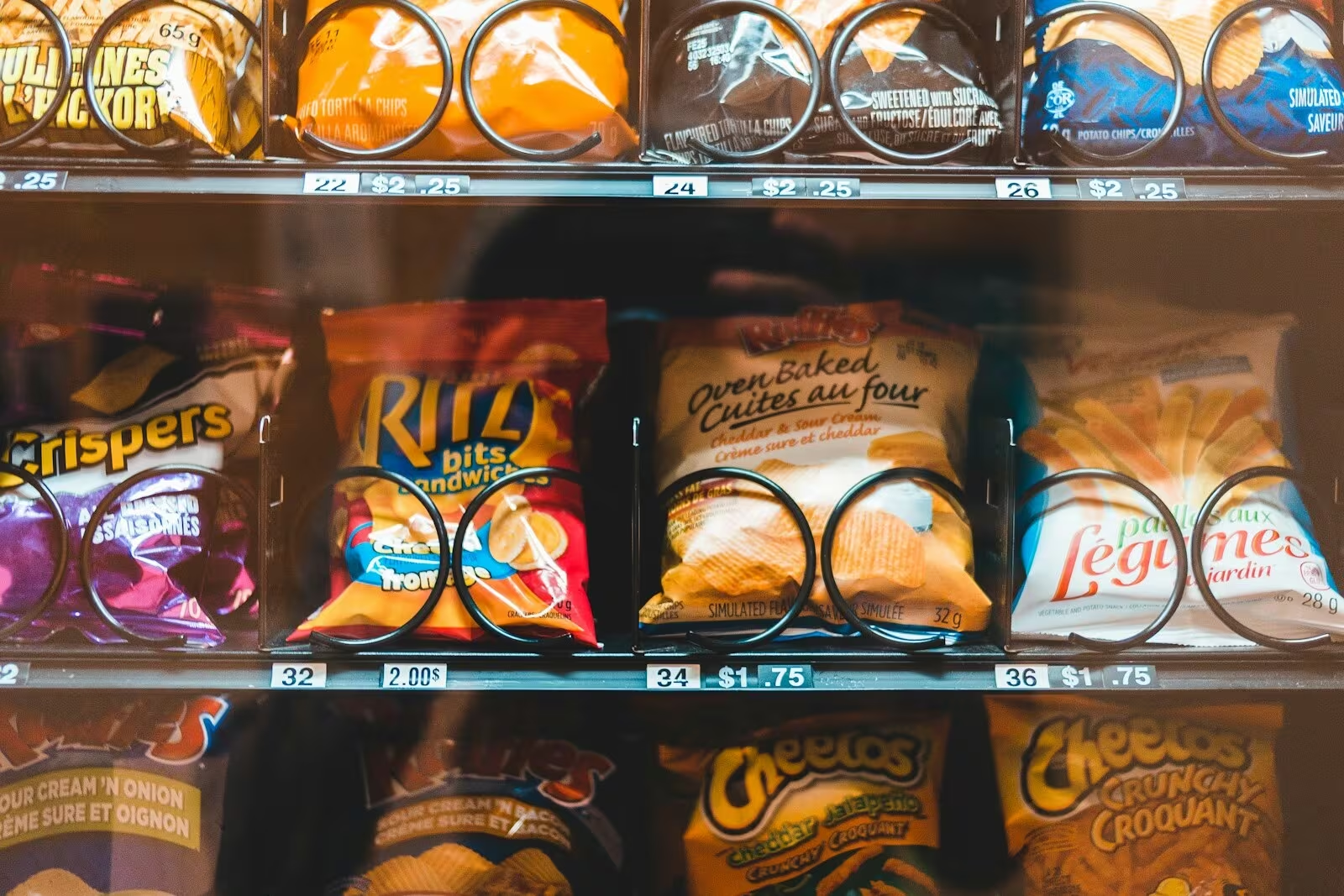
Snacks arranged on the shelves of a stocked vending machine

Match the room

Stock the building you're in, not the machine you own.

A gym will buy protein, electrolytes, and premium drinks at prices a warehouse would never pay. An office wants lunch-adjacent items and afternoon caffeine. Student housing runs late and buys differently at midnight than at midday. A manufacturing plant on shifts wants substantial food, fast. Build the list from the audience and the machine stops being a gamble.

  • Gyms — protein, electrolytes, and premium energy brands at real margin
  • Offices — lunch-adjacent items and afternoon caffeine on a weekday rhythm
  • Student housing — late-night volume and price sensitivity in the same machine
  • Plants and warehouses — substantial food that fits inside a short break

Step 2: Price for margin

Price for margin

Cost of goods is the number that decides your year.

Industry sources assume product runs around 50% of sales. Operators buying through the right channels run closer to 33%. On identical revenue that gap changes everything downstream — it is most of the difference between a route that nets 20% and one that nets 35%. Price every item against what you actually paid, and know that number before the machine is stocked.

  • Industry-typical product cost sits near 50% of sales
  • Buying through operator channels moves it closer to 33%
  • Set each vend price against your real landed cost, item by item
  • Higher-margin specialty items belong where the audience will pay for them
Industry-typical product cost, as a share of sales
~50%Industry-typical product cost, as a share of sales
What operators buying through the network run
~33%What operators buying through the network run
Gross per machine, per month
$150–$400Gross per machine, per month
Net margin after product, commission and fees
20–35%Net margin after product, commission and fees

Step 3: Move cost toward 33%

Then adjust

Stock conservatively for the first month and let the machine tell you.

Nobody gets the mix right on the first fill. Stock a conservative spread, treat month one as data collection, and then act on what actually sold rather than on what you expected to sell. Pull the items that did not move, widen the ones that did, and repeat. The operators who tune early end up with a machine that looks nothing like the one they installed, and earns considerably more.

  • Stock conservatively on the first fill — you're buying information, not volume
  • Treat month one as data collection, not as a verdict
  • Cut the non-movers on the next order rather than the next quarter
  • Widen the winners; a proven item deserves more slots than a hopeful one

The right list is the one that building will actually buy.

Tell us the account and we'll go through what tends to move there and what it should cost you to put on the shelf.