Most Profitable Vending Machine Items and Snacks (2026 List)
The 10 most profitable vending machine items and snacks, why each one sells, and how to match your product mix to the location.
Introduction
The most profitable vending machine items are the ones that sell fast at a healthy margin in your specific location. Here are the 10 that earn their slot in most machines:
- Chips and pretzels
- Chocolate bars and candy
- Cookies and pastries
- Protein and granola bars
- Nuts and trail mix
- Yogurt and fruit cups (refrigerated machines)
- Beef jerky and popcorn
- Local and regional snacks
- Energy drinks
- Sparkling and flavored waters
Vending machines are retail businesses that generate real cash flow when managed well. U.S. vending machine operators generated $8.9 billion in revenue in 2022 (U.S. Census Bureau), which shows people still pay for immediate convenience.
For an operator, the product mix is the difference between a machine that collects dust and one that pays for itself. This guide covers why each item sells, how to match your mix to the location, and the stocking mistakes that cost new operators money.
What Makes a Product Profitable for Vending Machines
Profitability in vending comes down to a simple equation. You need a balance of high-margin items and high-turnover products. High turnover means you sell a lot of units quickly, while high margin means you make more profit per item sold. You cannot rely on just one type.
Key factors for profitability include:
- Shelf life: Items must last long enough to sell.
- Brand recognition: People buy what they know.
- Size: Smaller items allow for higher capacity.
If you stock unknown brands or items that expire too fast, you lose money. It is interesting to note that snacks and cold beverages account for over 70% of vending sales revenue (NAMA).
How Vending Machine Profitability Works
Understanding the financial mechanics is essential before selecting products. The goal is to maximize the spread between your wholesale cost and the retail price while maintaining customer satisfaction. While costs vary, the median gross profit margin for traditional vending operators was about 50% in 2022 (NAMA).
To achieve this, successful operators analyze their "planogram," which is the visual layout of products inside the machine. Placing high-profit items at eye level and staples at the bottom can subtly influence purchasing decisions.
High-Margin Items and Turnover Rates
You need a mix of "penny profit" and "dollar profit" items. Chips are high turnover but might have lower margins per bag compared to other items. Conversely, beef jerky or electronics have high margins but sell slower.
The ideal mix:
- Anchors: High volume, lower margin (Chips, Sodas).
- Profit Drivers: Lower volume, high margin (Jerky, premium chocolates).
An operator balanced cash flow and higher per-unit profit by pairing jerky, which had a 55%+ margin, with standard chips.
Impact of Location and Technology
A machine in a gym needs different products than one in a law firm. Location dictates the "velocity" of sales. If you put sugary sodas in a yoga studio, they will sit there forever.
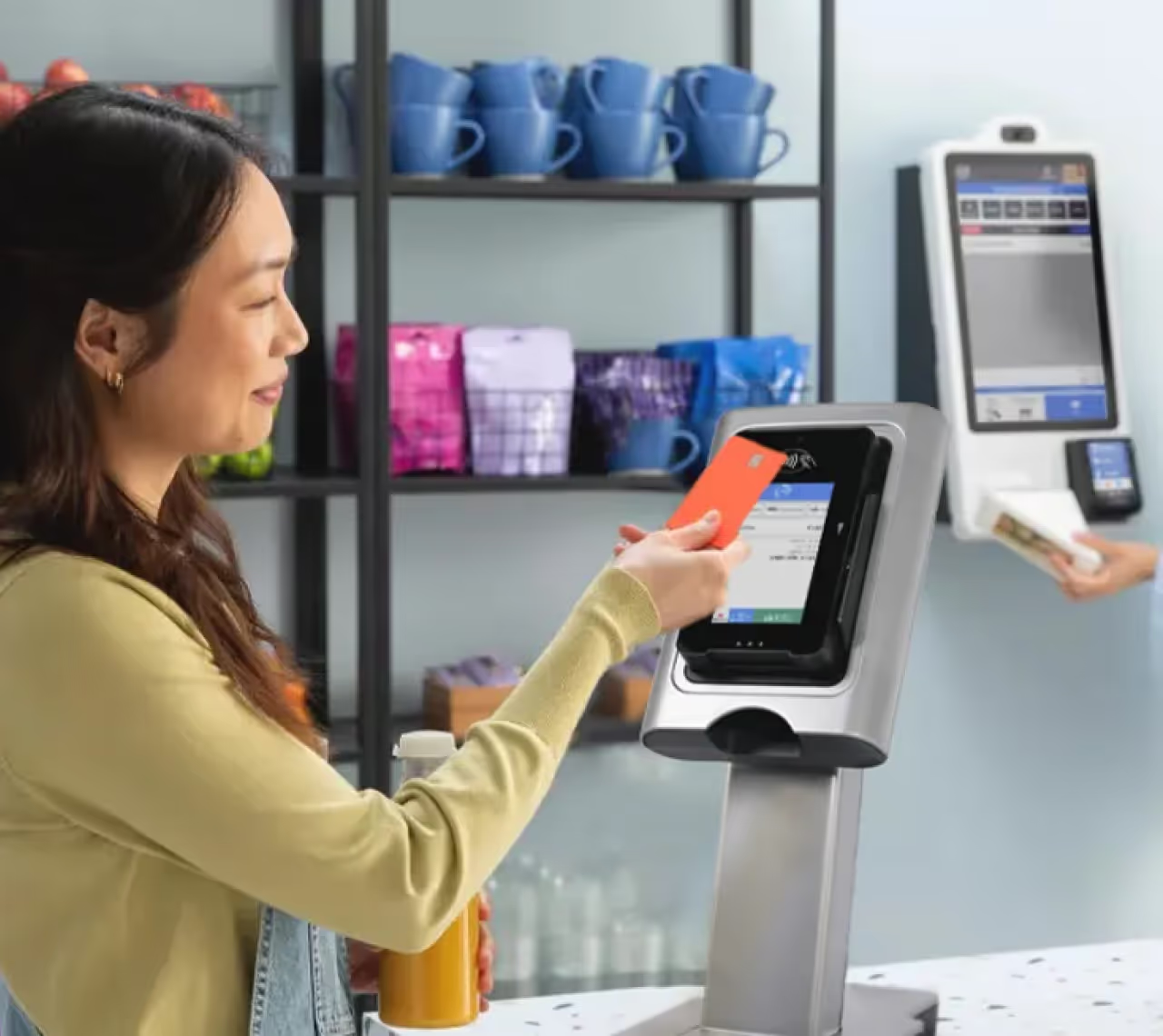
Technology also plays a huge role. Modern machines with card readers and mobile payment options remove friction. People rarely carry cash anymore. If your machine only takes quarters, you are leaving money on the table.
Revenue-Sharing Models
Most locations are won with a revenue share. You place and stock the machine at no cost to the host, and in exchange for the floor space and electricity the location receives a percentage of monthly sales.
That commission comes out of your margin, so it changes which products earn their slot. Price the commission into every item before you stock it: a product that barely pays at full margin can lose money after the location's share.
Match Products to the Location
The same machine stocked the same way will perform very differently in an office, an apartment lobby and a dorm. Before you fill a machine, learn who walks past it and when. Tailoring the selection to the type of building is the fastest way to raise sales per machine.
Office Break Rooms
Office workers have predictable habits. They need a morning boost and an afternoon pick-me-up. The key here is variety that covers both health goals and stress eating.
Popular office requests:
- AM: Cold brew coffee, breakfast bars, yogurt.
- PM: Energy drinks, salty snacks, chocolate.
Facilities managers often note that while employees say they want healthy snacks, they frequently buy chocolate when deadline stress hits. You have to stock for what they actually buy, not just what they say they want.
Apartment Lobbies
In multifamily buildings, vending machines replace the corner store. Residents use them for late-night cravings or essentials they forgot to buy at the grocery store. Convenience is the primary driver here.
Top apartment sellers:
- Large beverages (20oz sodas, water).
- Meal replacements (Cup noodles, mac and cheese).
- Indulgent snacks (Ice cream, large candy bars).
Operators often see increased amenity satisfaction and incremental revenue from late-night purchases in these locations.
Student Housing
University housing is a volume game. Students keep odd hours and run on caffeine and sugar. The turnover rate in dorms is incredibly high compared to office buildings.
Dorm essentials:
- Energy: Monster, Red Bull, heavy caffeine coffee.
- Study Snacks: Spicy chips, gummy candy, pop-tarts.
- Meals: Instant soup, microwave burritos.
Case studies show strong overnight sales of energy drinks and instant meals in student housing environments.
Top Profitable Snacks
Snacks are the bread and butter of any vending operation. They are impulse buys that satisfy immediate hunger. The key is sticking to recognizable brands. Customers are less likely to risk their money on an unknown snack brand in a vending machine.
You want items that provide a satisfying crunch or a sweet kick. These categories consistently perform well across almost all demographics and locations.
Crunchy Favorites: Chips and Pretzels
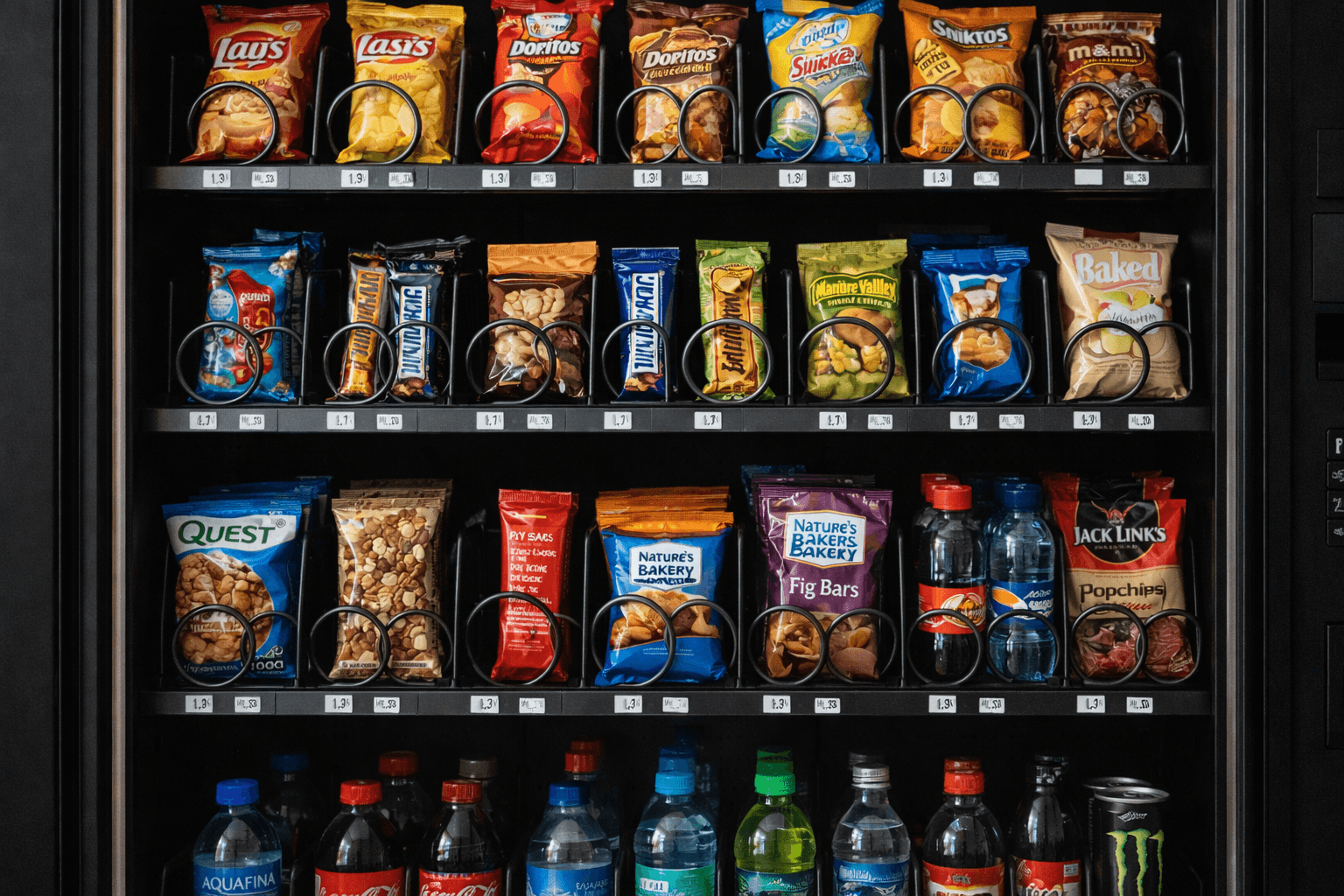
Salty snacks are non-negotiable. They are often the highest volume category in any machine. People crave salt, and bags of chips are the perfect delivery system.
Must-have items:
- Doritos (Nacho Cheese and Cool Ranch)
- Cheetos
- Lay's Classic
- Pretzels.
These items often command 100%+ markups on single-serve bags (NAMA). They move fast, ensuring your inventory doesn't go stale.
Sweet Indulgences: Chocolate Bars and Candy
When the afternoon slump hits, sugar is the answer. Chocolate bars and gummy candies are high-margin impulse buys. They are small, easy to stock, and have a decent shelf life.
Top performers:
- Snickers and Reese’s Peanut Butter Cups
- M&Ms (Peanut and Plain)
- Sour Patch Kids or Skittles
These items appeal to the emotional eater. It is a small reward for a hard day, making the price point less of a barrier.
Quick Bites: Cookies and Pastries
Sometimes a bag of chips isn't enough. People want something that feels more like "real" food or a substantial treat. Bakery items fill this gap perfectly.
Solid choices:
- Pop-Tarts
- Grandma’s Cookies
- Honey Buns or Donuts
- Rice Krispies Treats.
These items pair exceptionally well with coffee machines. They work best in office break rooms and morning-heavy traffic areas.
Top Healthy Vending Items
The demand for "better-for-you" options is real. While people still buy candy, a growing segment of the population refuses to eat processed sugar. Ignoring this group means losing sales.
Stocking healthy items also signals that the location cares about its people. It elevates the perception of the amenity from "junk food dispenser" to "wellness station."
Nutritious Bars: Protein and Granola
Bars are the ultimate convenience food. They are shelf-stable, durable, and packed with perceived value. They appeal to gym-goers and busy professionals who missed lunch.
Best stock:
- Protein: Quest Bars, ONE Bars, RXBAR
- Granola: Nature Valley, KIND Bars, Clif Bars
These items often command a higher price point than a candy bar, increasing your revenue per transaction.
Wholesome Mixes: Nuts and Trail Mix
Nuts provide healthy fats and sustained energy. They are a guilt-free snack for many people. Trail mix offers a balance of sweet and salty without being purely junk food.
Favorites include:
- Salted almonds or cashews
- Traditional trail mix with chocolate and raisins
- Spicy nut mixes
These appeal to the "keto" or low-carb crowd who cannot eat regular chips or candy.
Fresh Picks: Yogurt and Fruit Cups
If you have a micro market or a smart fridge, fresh food is a game-changer. It moves the machine from a snack stop to a meal destination.
Fresh options:
- Greek yogurt cups
- String cheese
- Fresh fruit cups (melon, grapes)
- Hummus and pretzel packs
These items have a shorter shelf life, so they require careful monitoring, but they build strong loyalty among regular customers.
Niche Products for Standout Profits
To truly maximize profit, you need items that customers can't easily find elsewhere. These are your differentiators. They justify higher price points and create excitement.
Standard vending fare is expected. Niche products are a surprise. They capture the customer who is looking for something specific or higher quality than a standard bag of chips.
Savory Twists: Beef Jerky and Popcorn
Beef jerky is a powerhouse. It has a high price point, high margin, and appeals to the protein-focused crowd. It is a premium snack.
Why stock them:
- Jerky: High protein, low carb, high perceived value
- Popcorn: SkinnyPop or Smartfood offers a lighter, lower-calorie alternative to chips
These items round out the salty snack category by offering premium and diet-friendly alternatives.
Local and Regional Snacks
Local brands give a machine something the corner store may not carry. Regional jerky, craft chocolate or a well-known local snack can build loyalty with regular customers.
These items can cost more to stock, but customers will often pay a premium for them. Test one or two slots before committing a full row.
Beverages Boost: Energy Drinks and Sparkling Waters
Water and soda are standard. But the real growth is in functional beverages. People want caffeine or flavor without the sugar crash.
Trending drinks:
- Energy: Celsius, Bang, or Yerba Mate
- Sparkling: LaCroix, Bubly, or Spindrift
- Coffee: Canned cold brew or oat milk lattes
These drinks often sell for $3.00 to $4.00, significantly boosting the machine's total revenue compared to $1.50 sodas.
Best Practices for Stocking Vending Machines
Stocking a machine isn't just about filling holes. It is a strategic process. You need to use data, not intuition. The most successful machines are managed dynamically.
Monitor Sales Data with Smart Tech
Guesswork kills profit. Modern machines use telemetry to track exactly what sells and when. This allows for "just-in-time" restocking and precise inventory management.
What to track:
- Best sellers vs. slow movers
- Peak sales times
- Out-of-stock instances
If a slot is empty, you are losing money. Smart tech alerts operators before the machine runs dry.
Rotate Based on Trends and Seasons
People get bored. If you keep the exact same items for a year, sales will dip. You need to rotate flavors and try new products.
Rotation tips:
- Seasonal: Pumpkin spice in fall, lemonade in summer
- Trial Slots: Dedicate one row to testing new products
- Feedback: Ask the location contact and regular customers what they want
Keeping the selection fresh keeps customers coming back to see "what's new."
Build a Route That Runs Without You
Once the product mix works, the goal is a route you do not have to babysit:
- Use machines with real-time sales monitoring, so you restock what sold instead of guessing
- Set a regular restocking schedule for each location
- Track expiration dates on fresh and refrigerated items every visit
This keeps every machine full of what sells and frees your time for finding the next location.
Common Mistakes to Avoid
Even with good products, you can fail if you ignore the basics. Avoid these pitfalls to keep your revenue flowing.
Top mistakes:
- Ignoring Expiration Dates: Selling stale food destroys trust instantly
- Bad Product Placement: Hiding best-sellers in the bottom corner reduces sales
- Cash-Only Machines: You will lose at least 20% of sales immediately
- Empty Spirals: An empty machine looks neglected and unreliable
Learn to Pick Products That Sell
Product mix is one of the first things new operators get wrong: they stock what they like instead of what the location buys, and they guess instead of reading sales data. Vendingpreneurs coaches new operators through the whole business, from finding locations and choosing machines to building a product mix that sells. See how the program works.
Conclusion
A profitable machine combines high-margin favorites like chips and chocolate with the healthy options, drinks and local products your location's customers actually buy. Start with the 10 items above, watch your sales data, and swap out anything that does not move.
Whether your machine sits in an office, an apartment building or student housing, the right products make the difference between a slow machine and a strong one.
Frequently Asked Questions
How much can I expect to earn from a single vending machine monthly?
A well-stocked vending machine in high-traffic spots like offices or dorms generates $300 to $1,500 monthly, based on 50-100 daily vends at $2-3 average price and 50% margins, per NAMA data.
What are the startup costs for a vending machine?
Basic combo machines cost $3,000-$6,000, plus $500-$1,000 initial inventory; smart models with telemetry run $5,000-$10,000. Revenue-share options eliminate upfront costs for hosts.
How often should I restock a vending machine?
Restock weekly for high-traffic locations like dorms, bi-weekly for offices; use telemetry data to monitor and avoid out-of-stocks, ensuring 20-30% inventory turnover daily.
Can vending machines sell hot food items?
Yes, advanced machines offer hot options like pizza or burritos via combo units with microwaves, but they require ventilation and frequent restocking due to 1-2 day shelf life.
What payment methods boost vending sales most?
Cashless options like cards and mobile apps increase sales by 20-30%, as 70% of consumers prefer them over coins, per NAMA; retrofit kits cost $300-$800.