How Smart Vending (Cashless Payments, IoT Machines) is Changing the Vending Business
[

[

](/) HomeAbout UsCase StudiesMachine MarketplaceVending LeadsVending CPA ExpertsMachine FinancingVending InsuranceContact Us HomeAbout UsCase StudiesNewsVending MarketplaceVending LeadsVending CPA ExpertsMachine FinancingVending InsuranceContact Us December 5, 2025
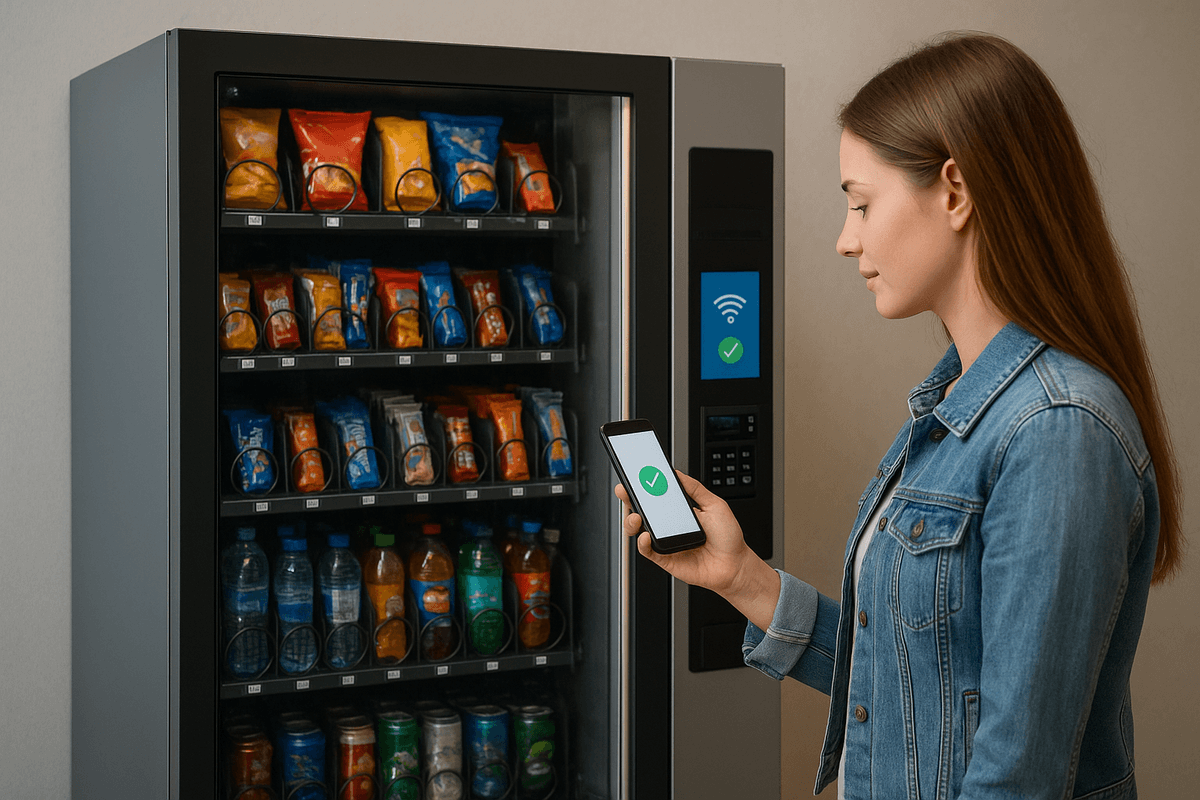
Smart vending, utilizing cashless payments and IoT technology, is revolutionizing the industry by enhancing customer convenience and operational efficiency. With 71% of vending sales now cashless and a projected market growth to USD 26.79 billion by 2032, businesses adopting these innovations can boost sales by 15-20%. This evolution not only meets consumer preferences but also optimizes inventory management, ensuring competitiveness in a digital marketplace.
Are outdated vending machines holding back your business’s potential? This article reveals how smart vending, powered by cashless payments and IoT technology, is revolutionizing the industry and enhancing customer experience. With 70% of consumers preferring digital payment options, embracing these innovations can significantly boost your sales and operational efficiency.
Introduction: The Smart Vending Revolution
The smart vending revolution is transforming how consumers interact with vending machines, driven by advancements in cashless payments and IoT technology. This shift not only enhances user convenience but also provides operators with valuable data insights. As consumers increasingly prefer seamless, contactless transactions, smart vending machines are becoming essential in various environments, from offices to public spaces.
The global smart vending machine market is experiencing significant growth, projected to reach USD 26.79 billion by 2032, with a compound annual growth rate (CAGR) of 10.6% from 2025 to 2032. This rapid expansion is fueled by the rising demand for intelligent vending solutions that offer personalized experiences and efficient inventory management. The intelligent vending machine market alone is expected to grow to USD 36.89 billion by 2032, showcasing a remarkable CAGR of 18.2% during the same period. These trends highlight not only the technological advancements but also the increasing consumer expectations for convenience and efficiency in everyday transactions.
As businesses adapt to these changes, integrating smart vending solutions can significantly enhance customer satisfaction and operational efficiency.
How Cashless Payments Are Transforming Vending Operations
The integration of cashless payment systems is significantly reshaping vending operations, enhancing convenience for users and efficiency for operators. As consumer preferences shift towards seamless transactions, vending machines equipped with cashless options are becoming increasingly popular. This transition not only simplifies the purchasing process but also reduces the need for cash handling, which can be cumbersome and costly for operators.
In fact, cashless payments accounted for seventy-one percent of all vending machine sales last year, marking a seventeen percent increase compared to 2023. This trend underscores the growing acceptance of digital payment methods among consumers, who appreciate the speed and ease of transactions.
Furthermore, the replacement of traditional bill acceptors with card payment systems has proven beneficial.
As vending operations adapt to these changes, they stand to gain valuable insights from transaction data, which can inform inventory management and marketing strategies. The evolution towards cashless payments is not just a trend; it's a fundamental shift that is likely to define the future of vending.
The Shift from Cash to Digital: Key Statistics
The shift from cash to digital payments in vending reflects a broader trend toward convenience and efficiency. In 2022, 67% of all vending transactions were cashless, highlighting consumer preference for quick, contactless purchases. This transition not only simplifies transactions but also enhances operational efficiency for vending operators.
Multiple Payment Options Drive Higher Transaction Values
Offering multiple payment options significantly boosts transaction values in vending. For instance, cashless transactions often yield higher average purchases compared to cash. Last year, the average cashless vending transaction was $2.24, while cash purchases averaged just $1.78. This trend shows that consumers are willing to spend more when provided with convenient payment methods, enhancing overall revenue for operators.
IoT-Enabled Machines: Real-Time Monitoring and Remote Management
The integration of IoT technology into vending machines is revolutionizing the industry by enabling real-time monitoring and remote management. This advancement allows operators to process rapid, secure credit and debit transactions from any location, enhancing customer convenience. Additionally, these machines can monitor environmental conditions using sensing technology to maintain the quality of perishable items.
With the ability to track and manage inventory through data analytics, operators can incorporate customer data into planning, ensuring the right products are available at the right time. Remote monitoring and predictive maintenance maximize vending machine efficiency, reducing downtime and operational costs. Furthermore, using real-time data empowers businesses to improve decision-making and profitability, turning vending machines into intelligent retail solutions.
Remote management of smart vending machines is one of the most compelling arguments for companies to deploy such devices worldwide, with advancements in IoT networks benefiting the retail industry and creating new opportunities.
Smart Inventory Tracking Reduces Stock-Outs and Waste
Smart inventory tracking is crucial for reducing stock-outs and minimizing waste in the vending industry. By utilizing IoT-enabled machines, operators can continuously monitor stock levels and receive real-time alerts when supplies run low. This proactive approach not only safeguards against lost sales due to empty machines but also optimizes inventory management, leading to reduced replenishment costs and improved profitability.
Revenue Growth Opportunities with Smart Vending
The integration of smart vending technology offers significant revenue growth opportunities for operators. By embracing cashless payment systems and IoT capabilities, businesses can enhance customer experiences and streamline operations. Machines equipped with cashless technology can see a transaction boost of 15-20%, making them more appealing to consumers who prefer contactless options (BetterHealth Vending).
Moreover, reports indicate that vending machine sales are projected to rise by 10-12%, driven by a growing trend toward cashless transactions in food and beverage sectors. This shift not only meets consumer preferences but also enables operators to gather valuable data on purchasing behaviors, optimizing inventory management and product offerings.
With these advancements, businesses can capitalize on new revenue streams while providing a more user-friendly experience. As the market continues to evolve, adopting smart vending solutions will be essential for staying competitive and maximizing profitability in the vending industry.
Dynamic Pricing and Promotional Capabilities
Dynamic pricing and promotional capabilities are vital for maximizing revenue in smart vending operations. With real-time connectivity, operators can track transactions and revenue, ensuring they have up-to-date financial insights. Alerts for low stock or machine errors help maintain optimal performance, while remote price adjustments enable tailored pricing strategies for different locations. Additionally, analyzing peak sales times allows for more effective stocking schedules, ensuring that popular items are available when demand is highest. This data-driven approach not only enhances operational efficiency but also improves customer satisfaction.
Industry Applications: Where Smart Vending Thrives
Smart vending machines are increasingly becoming integral to various industries, driven by advancements in technology and changing consumer preferences. These machines enhance user experience through cashless payment options and IoT connectivity, allowing for seamless transactions and real-time inventory management. As a result, businesses can offer personalized services tailored to customer needs, leading to increased sales and customer satisfaction.
The strategic placement of smart vending machines is also noteworthy. For instance, approximately 55% of vending units are located in high-traffic areas such as airports, business centers, and schools. This concentration highlights the demand for convenient access to food and beverages in settings where consumers are often on the go. Additionally, the focus on healthy options is evident, with 30% of deployments emphasizing nutritious food and beverage choices. This shift aligns with growing consumer awareness regarding health and wellness, making smart vending a viable solution for businesses aiming to cater to diverse dietary preferences.
The impact of the vending industry is significant, contributing nearly $25 billion to the U.S. economy and generating substantial job opportunities. As smart vending continues to evolve, its applications across different sectors will likely expand, further solidifying its role as a modern solution for consumer needs.
Office Buildings and Corporate Campuses
Smart vending machines are increasingly tailored for office buildings and corporate campuses, where convenience and efficiency are paramount. These machines facilitate cashless payments, minimizing transaction times and enhancing user experience. By integrating IoT technology, businesses can monitor inventory in real-time, ensuring popular items remain stocked, which drives employee satisfaction and engagement.
Multi-Family Residential and Student Housing
Smart vending solutions are particularly beneficial in multi-family residential and student housing environments. These settings often experience high foot traffic and diverse consumer needs, making smart vending machines an ideal fit. For instance, IoT-enabled machines can provide tailored offerings based on user preferences, while cashless payment options enhance convenience. Additionally, smart vending machines can be configured as climate-controlled food-delivery lockers, ensuring fresh and secure access to meals and snacks in locations like college dorm lobbies and apartment buildings.
Healthcare Facilities and Transportation Hubs
Smart vending machines are increasingly finding their place in healthcare facilities and transportation hubs. These environments benefit from cashless payment options, which streamline transactions for staff, patients, and travelers. With 24/7 operations, these machines ensure essential items are readily available. Their digital interfaces and remote inventory management capabilities allow for efficient stock monitoring, minimizing shortages. This technology not only enhances consumer satisfaction but also supports healthcare advancements by providing timely access to necessary products.
Conclusion: Embracing the Smart Vending Transformation
The shift towards smart vending is not merely a trend; it represents a fundamental transformation in how consumers interact with vending machines. By integrating cashless payment systems and IoT technology, these machines provide a seamless user experience that meets the demands of today's consumers. This evolution not only enhances convenience but also delivers valuable data insights for operators, enabling them to optimize inventory and improve service.
This insight underscores the necessity for businesses to adapt to these advancements. With the smart vending machine market projected to grow significantly, companies that embrace this transformation can expect to enhance their operational efficiency and customer satisfaction. Understanding and leveraging these technologies will be crucial for staying competitive in an increasingly digital marketplace. The future of vending is not just about machines; it’s about creating intelligent, responsive environments that cater to consumer needs and preferences.
Frequently Asked Questions
What are the benefits of cashless payment systems in vending machines?
Cashless payment systems enhance user convenience, reduce cash handling costs, and streamline transactions for operators, leading to increased sales and customer satisfaction.
How does IoT technology improve vending machine operations?
IoT technology enables real-time monitoring of inventory and environmental conditions, allowing operators to efficiently manage stock levels and optimize product offerings, thereby reducing waste and downtime.
What is the projected growth of the smart vending machine market?
The smart vending machine market is projected to reach USD 26.79 billion by 2032, with a compound annual growth rate (CAGR) of 10.6% from 2025 to 2032, indicating significant growth opportunities.
How do multiple payment options affect vending transaction values?
Offering multiple payment options can drive higher transaction values; for instance, the average cashless vending transaction was $2.24, compared to $1.78 for cash purchases, encouraging consumers to spend more.
Where are smart vending machines most commonly located?
Smart vending machines are often placed in high-traffic areas such as airports, business centers, and schools, catering to consumers seeking convenient access to food and beverages.
[
](#) HomeAbout UsCase StudiesNewsVending MarketplaceVending LeadsVending CPA ExpertsMachine FinancingVending Insurance Contact Us Terms Privacy Policy